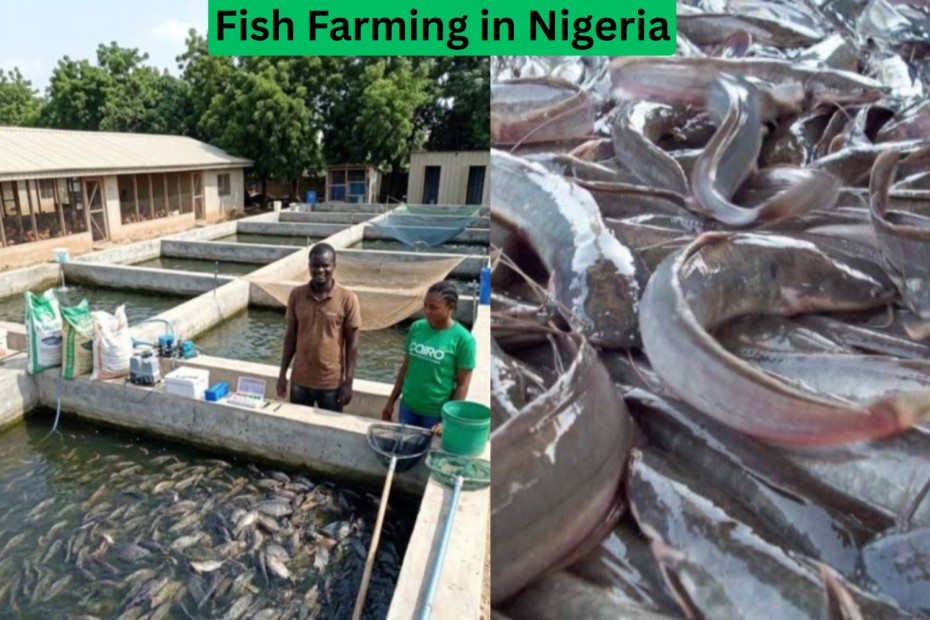
Fish farming in Nigeria remains one of the most lucrative agribusiness ventures. This is because, Nigeria’s growing appetite for fish is outstripping local supply by over 50%, thereby creating a multi-billion-naira market deficit that traditional open-water fishing can no longer fill. For smart entrepreneurs and investors, this massive gap isn’t a crisis—it’s a goldmine.
Fish farming in Nigeria has rapidly evolved from a casual backyard hobby into one of the most lucrative, recession-proof agribusinesses in the country. With an insatiable national demand for animal protein, remarkably fast fish growth cycles, and a ready-made market at every street corner—from open-air stalls to bustling “point-and-kill” spots—aquaculture offers an unmatched opportunity to turn modest capital into steady, high-margin cash flow.
Whether you are looking to build a commercial empire or scale a profitable side venture, navigating this industry successfully requires more than just capital; it takes precise strategy, water management, and smart execution. If you are ready to tap into a booming market where your investment can yield harvest-ready returns in just a few months, this guide on fish farming in Nigeria is your blueprint to getting started right.
Meaning of fish farming
At its core, fish farming is a specialized branch of aquaculture that involves the controlled breeding, rearing, and harvesting of fish in artificial or semi-natural aquatic enclosures. From an economic and business standpoint, fish farming in Nigeria is a fast-turnover agricultural venture designed to bridge the massive national protein deficit by mass-producing table-sized fish for profit. Here, it functions as a controlled manufacturing process where capital, feed, and labor are systematically converted into high-demand animal protein. Operating within urban backyards, peri-urban spaces, or rural land, commercial fish farmers treat their ponds like production lines to supply open markets, hotels, and local “point-and-kill” spots with consistent, year-round harvests.
This practice primarily translates to the commercial cultivation of freshwater species—most notably the hardy African Sharptooth Catfish (Clarias gariepinus) and, increasingly, Tilapia—inside structured facilities like concrete tanks, earthen ponds, or mobile tarpaulin systems. Unlike traditional open-water fishing, where catches from rivers and oceans are left entirely to chance, fish farming gives you absolute control over the entire production lifecycle. From managing the exact feeding schedule and water chemistry to monitoring growth rates from a microscopic juvenile stage all the way to a marketable table size, aquaculture transforms fish production into a predictable, science-backed business enterprise.
Types of Fish Farming in Nigeria
Fish farming in Nigeria vary widely depending on available capital, technical expertise, land space, and proximity to water resources. Understanding these systems helps you choose the right setup for your budget and goals.
The three primary systems practiced across Nigerian aquaculture are:
1. Extensive and Semi-Intensive Systems (Earthen Ponds)
Typically practiced in rural or peri-urban areas where large expanses of land are accessible. These involve digging deep basins into the earth and filling them with water from natural streams, rivers, or boreholes.
In extensive systems of fish farming in Nigeria, fish rely heavily on natural food organisms (like plankton and algae) grown within the soil, requiring minimal supplemental feeding. Semi-intensive systems use earthen ponds as well, but supplement natural food with commercial feeds to boost growth rates.
This system of fish farming is most suited for large-scale commercial production, broodstock management, and farmers with access to cheap land and abundant water supply.
2. Intensive Systems (Concrete and Tarpaulin/Mobile Ponds)
Intensive system is the absolute backbone of urban and semi-urban fish farming. These systems utilize artificial enclosures built above or slightly below ground level. Concrete ponds offer permanent, lifetime durability and maximum structural control. Tarpaulin or plastic mobile ponds provide a flexible, modular, and budget-friendly alternative for backyard setups. Because these systems do not generate natural food, fish depend 100% on high-protein commercial floating feeds. They require active management, including regular water exchanges or filtration to flush out waste and maintain clean oxygen levels.
This system of fish farming in Nigeria is best suited for beginners with limited backyard space, urban entrepreneurs, and medium-scale commercial farmers who want precise control over their stock.
3. Super-Intensive Systems (Recirculating Aquaculture Systems – RAS)
This type of fish farming in Nigeria requires advanced, highly technical, and often indoor facilities that feature complex networks of tanks, mechanical filters, biological filters, UV sterilizers, and oxygen pumps.
In this system of fish farming, water is continuously filtered, treated, and recycled back into the fish tanks rather than being discarded. This allows farmers to stock thousands of fish in a remarkably tiny footprint. However, because they rely heavily on constant electricity, they require reliable backup power sources (generators or heavy-duty solar arrays) to prevent catastrophic losses during power outages.
This system of fish farming is best suited for commercial investors and corporate farms operating in high-density urban zones where land is expensive and maximum production volume per square meter is the priority.
Viable Species for Successful Fish Farming in Nigeria
Choosing the right fish species is one of the most important decisions you will make as a fish farmer in Nigeria. Not all aquatic species can adapt to the local climate, water chemistry, and commercial feeding requirements.
The most viable, commercially proven, and profitable fish species cultivated in Nigerian aquaculture include:
1. African Catfish (Clarias gariepinus and Hybrids) — The King of Nigerian Aquaculture
Catfish accounts for roughly 80% of total fish farming production in Nigeria, making it the undisputed market leader.
- Key Variants: Clarias gariepinus (Pure African Catfish), Heterobranchus bidorsalis, and the Heteroclarias hybrid (a crossbreed between Clarias and Heterobranchus that combines fast growth with large body size).
- Why it thrives: It is exceptionally hardy, can tolerate low-oxygen environments due to its specialized breathing organ, boasts a rapid growth rate (reaching 1kg to 1.5kg table size in 4 to 6 months), and enjoys massive, unyielding national demand.
2. Tilapia (Oreochromis niloticus — Nile Tilapia)
Tilapia is the second most popular and widely cultured food fish in Nigeria, gaining traction among health-conscious consumers and commercial producers.
- Key Variants: Nile Tilapia (Oreochromis niloticus) and Blue Tilapia.
- Why it thrives: Tilapia is resilient, disease-resistant, and feeds on a versatile diet (including plant-based and agricultural byproducts, which can lower feed costs). It reproduces easily and has a steady, high market price, though it requires good water quality to reach optimal market size quickly.
3. African Bonytongue (Heterotis niloticus)
Locally known as Islan or “Kanya” in some regions, this is an indigenous freshwater fish that is gaining recognition as a prime candidate for aquaculture diversification.
- Why it thrives: It is an herbivore/omnivore with a high market value, excellent meat quality, and can grow remarkably large (up to 3kg to 4kg in a year) under proper pond management. Nigeria leads global production in this species, making it an exciting venture for specialized commercial farms.
4. Carp (Cyprinus carpio — Common Carp & Grass Carp)
Carp species are well-adapted to freshwater pond systems across various regions of Nigeria.
- Why it thrives: They are adaptable, highly economical, and boast high survival rates. Carps can feed on natural organisms in earthen ponds, which helps minimize overall operational and feeding expenses. However, they require careful pond management because their bottom-feeding habits can easily muddy the water.
Benefits of Fish Farming in Nigeria
Fish farming in Nigeria has evolved from a minor agricultural sub-sector into a major economic and nutritional pillar across different villages, towns and cities in Nigeria. The explosive growth of the industry is driven by several critical benefits that impact individuals, communities, and the national economy. Here are some vital benefits of fish farming in Nigeria:
- Bridging the National Protein Deficit: Fish farming is a vital staple in Nigerian households. It provides an affordable, highly digestible source of high-quality animal protein and essential Omega-3 fatty acids, helping combat malnutrition and supporting public health.
- Rapid Production and Fast Return on Investment (ROI): Unlike cattle, goats, or large livestock that take years to mature, commercially raised catfish transform from fragile juveniles into market-ready table size (1kg to 1.5kg) within a short 4 to 6-month cycle, enabling swift capital recovery.
- High Market Liquidity and Consistent Cash Flow: Due to massive everyday demand from open-air food markets, neighborhood “point-and-kill” bars, hotels, restaurants, and event caterers, harvested fish move quickly, ensuring that capital is rarely tied down for long periods.
- Massive Wealth Creation and Entrepreneurial Opportunities: Fish farming in Nigeria value chain—ranging from specialized hatcheries and commercial feed distribution to processing kilns and logistics—offers diverse entry points for modern entrepreneurs seeking profitable business ventures.
- Direct and Indirect Employment Generation: Fish farming in Nigeria just like other countries creates millions of jobs across the nation. It actively employs farm managers, manual laborers, feed suppliers, ice block vendors, and transporters, serving as a powerful tool for youth empowerment and poverty reduction.
- Land Versatility and Urban Farming Compatibility: Unlike traditional crop farming that requires massive acreage in rural regions, fish farming in Nigeria can be established in limited spaces. Compact concrete and mobile tarpaulin tanks allow individuals to run profitable commercial units right inside residential backyards.
- Low Organic Waste and Agricultural Synergy: Wastewater drained from fish ponds is rich in organic nitrogen and phosphorus, making it an exceptional, nutrient-dense organic fertilizer for backyard vegetable gardens, crop farms, or integrated agriculture systems.
- High Resilience to Local Climatic Changes: The dominant species farmed in Nigeria—the African Sharptooth Catfish—is exceptionally hardy. It can tolerate variable weather conditions and lower oxygen environments better than many other farmed aquatic species, reducing the risk of sudden total stock loss.
- Foreign Exchange Savings and Import Substitution: By boosting domestic fish production to close the historical supply gap, local fish farming in Nigeria reduces the nation’s heavy reliance on imported frozen fish, conserving vital foreign exchange reserves for the country.
Factors to Consider for a Successful Fish Farming in Nigeria
To protect your capital and navigate the competitive nature of fish farming, you must carefully evaluate these ten crucial operational factors before launching your farm:
1. Uncompromised Water Source and Quality: Water is the absolute lifeblood of aquaculture. You must secure a reliable, clean source of water—such as a dedicated, high-yield borehole. Untreated chemical-laden tap water or toxic runoff can wipe out an entire stock overnight.
2. Strategic Site Location and Logistics: Your farm must be located within reasonable proximity to major consumer markets and accessible via motorable roads. This ensures that bulk feed deliveries and logistics trucks carrying harvested fish can move without friction.
3. Appropriate Pond Type Selection: Match your physical space and budget to the correct pond architecture. Choose modular tarpaulin/plastic tanks for tight backyard setups, durable concrete structures for permanent urban commercial use, or large earthen ponds if you have cheap, expansive rural land for your fish farming.
4. Comprehensive Technical Training and Mentorship: Never jump into fish farming based solely on theory. Spend weeks or months understudying an operational farm or working under an experienced mentor to master hands-on water management, sorting, and disease identification.
5. Strict Feed Management and FCR Awareness: Commercial feed accounts for roughly 70% of your total running expenses. For you to be successful in your fish farming, you must understand the Feed Conversion Ratio (FCR), budget accurately for floating versus sinking feeds, and avoid overfeeding, which wastes money and pollutes water.
6. Quality of Fingerlings or Juveniles: Always source your baby fish from reputable, certified hatcheries. Avoid cheap, low-grade stock with poor genetics, as they result in stunted growth, high mortality, and massive financial losses.
7. Stocking Density and Overcrowding Control: Respect the carrying capacity of your tanks. Overstocking restricts oxygen availability, stunts growth, and triggers aggressive cannibalism among fish, drastically reducing your final harvest yield.
8. Capital Adequacy and Cash Flow Planning: Fish farming is capital-intensive during the setup phase. You must have sufficient financial runway to sustain daily feeding and operational overhead across the entire 4 to 6-month production cycle before realizing your sales revenue.
9. Proactive Market Research and Sales Strategy: Do not wait until your fish are fully grown to look for buyers. Establish active relationships with open-market traders, local hotels, event caterers, and roadside “point-and-kill” bar operators well ahead of your harvest date.
10. Value Addition and Processing Capability: To maximize profitability and eliminate the pressure of selling live fish all at once, factor in value addition. Investing in a fish smoking kiln and NAFDAC-compliant packaging allows you to process, preserve, and sell dried fish at significantly higher margins.
Fish Farming in Nigeria: Final Thoughts
Fish farming in Nigeria has evolved far beyond a casual backyard pastime into a robust, multi-billion-naira agribusiness sector. Driven by a massive national protein deficit, rapid fish growth cycles, and an insatiable market demand, the sector offers modern entrepreneurs an exceptional opportunity to build a profitable and recession-proof enterprise.
Success in this industry, however, does not happen by accident. As outlined in this guide, building a thriving fish farm requires careful planning across several non-negotiable pillars:
- Understanding the core technical and commercial definitions of fish farming.
- Choosing the right production system—whether an intensive concrete setup, a modular tarpaulin tank, or a large-scale earthen pond.
- Selecting a proven, resilient species like the African Catfish.
- Mastering critical operational factors, including uncompromised water quality, strict feed management, proper stocking density, and proactive marketing strategies.
Whether you are starting small with a single mobile tank in your backyard or scaling toward a commercial aquaculture empire, taking a disciplined, data-driven approach will protect your capital and secure your profit margins in your fish farming.
Source: Farmersphere